Easy Chimichurri Sauce Recipe – Fresh Herb Flavor
Chimichurri sauce recipe – the vibrant, herbaceous condiment that instantly elevates any grilled meat, roasted vegetable, or even a simple piece of bread. If you’ve ever tasted its bright, garlicky, and slightly tangy goodness, you know it’s more than just a sauce; it’s an experience. That’s precisely why I’m so thrilled to share my go-to chimichurri sauce recipe with you today. Forget those store-bought versions that lack the fresh, zesty punch; this homemade marvel is incredibly easy to whip up and bursting with flavor. It’s the secret weapon I reach for when I want to add a restaurant-quality flourish to my cooking. What makes this particular chimichurri sauce recipe so special is its perfect balance – it’s never overpowering, allowing the star ingredients to truly shine, creating a truly unforgettable taste sensation that will have everyone asking for the recipe.
Chimichurri Sauce Recipe
There are few condiments that possess the vibrant, herbaceous punch of chimichurri. This Argentinian staple is incredibly versatile, transforming grilled meats, roasted vegetables, and even simple sandwiches into something truly spectacular. Its bright, zesty flavor comes from a harmonious blend of fresh herbs, garlic, and a touch of acidity, making it a perfect counterpoint to richer dishes. While it’s often associated with steak, I’ve found it to be a revelation on chicken, fish, and even as a dressing for hearty salads. Once you taste this homemade chimichurri, you’ll understand why it’s so beloved. It’s surprisingly easy to make, and the fresh ingredients truly shine through. Forget store-bought versions; this recipe is all about capturing that authentic, bursting-with-flavor essence.
Ingredients:
Instructions:
Making chimichurri is a wonderfully simple process, and you can tailor it to your exact preference. The key is using the freshest ingredients you can find, as their quality will directly impact the final taste of the sauce. I prefer a slightly chunkier texture, which allows the individual flavors of the herbs and aromatics to be more pronounced. However, if you prefer a smoother sauce, you can certainly process it for longer.
1. Preparing the Herbs and Aromatics:
Start by thoroughly washing and drying your fresh herbs: parsley, cilantro, and oregano. It’s crucial to remove all the stems, as they can impart a bitter flavor and a stringy texture to the sauce. For the parsley and cilantro, I find it easiest to pick the leaves directly off the stems. For the oregano, depending on the thickness of the stems, you might be able to strip the leaves as well, or finely chop the very tender stems if you wish. Once you have your herb leaves, give them a rough chop. Don’t worry about being too precise here, as we’ll be processing them further. Next, prepare your red onion or shallots. A rough chop is perfectly fine. Peel your garlic cloves. Having all these components ready makes the rest of the process smooth and efficient.
2. Combining the Dry Ingredients:
In a food processor or a blender, combine the chopped fresh parsley, cilantro, oregano, red onion (or shallots), peeled garlic cloves, and red pepper flakes. Pulse the mixture a few times until everything is finely chopped and begin extractning to come together. You’re aiming for a texture that’s well-minced but not yet a paste. If you don’t have a food processor, you can finely mince all of these ingredients by hand with a sharp knife. This will take a little more time and effort, but the result will be just as delicious. For those who enjoy a bit of heat, feel free to add a pinch more red pepper flakes here, or even a small fresh chili pepper for an extra kick.
3. Incorporating the Liquids and Seasoning:
Once the herbs and aromatics are finely chopped, it’s time to introduce the liquids and seasoning. Pour in the extra-virgin extract olive oil, red grape juice vinegar, and fresh lemon juice. Add the kosher salt. The olive oil forms the base of the sauce, while the vinegars provide that essential tang and brightness. The lemon juice adds another layer of acidity and a beautiful freshness. I prefer red grape juice vinegar for its robust flavor, but apple cider vinegar can also be a good substitute if you have it on hand. Ensure your lemon juice is freshly squeezed; bottled lemon juice just doesn’t have the same lively flavor.
4. Processing to the Desired Consistency:
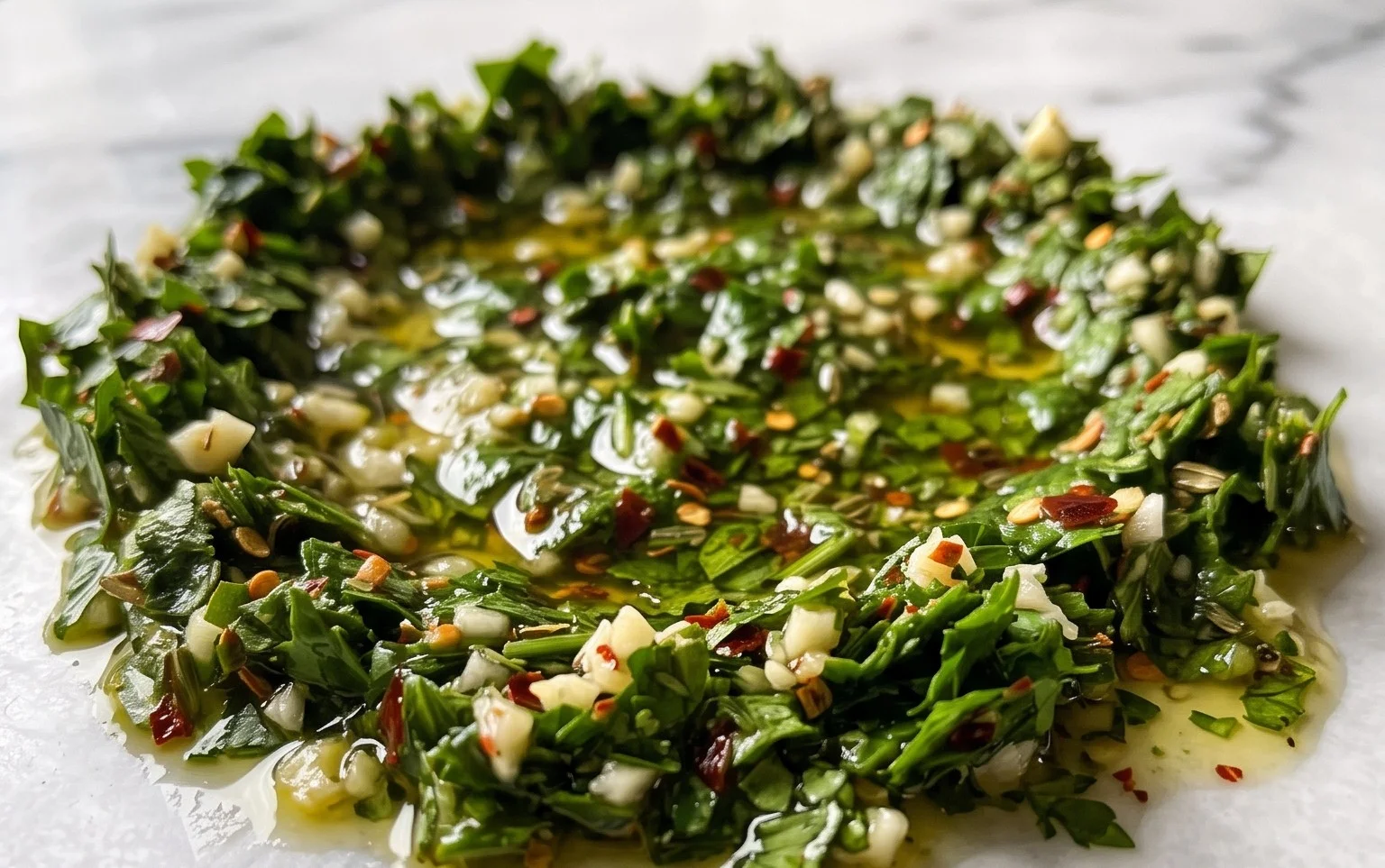
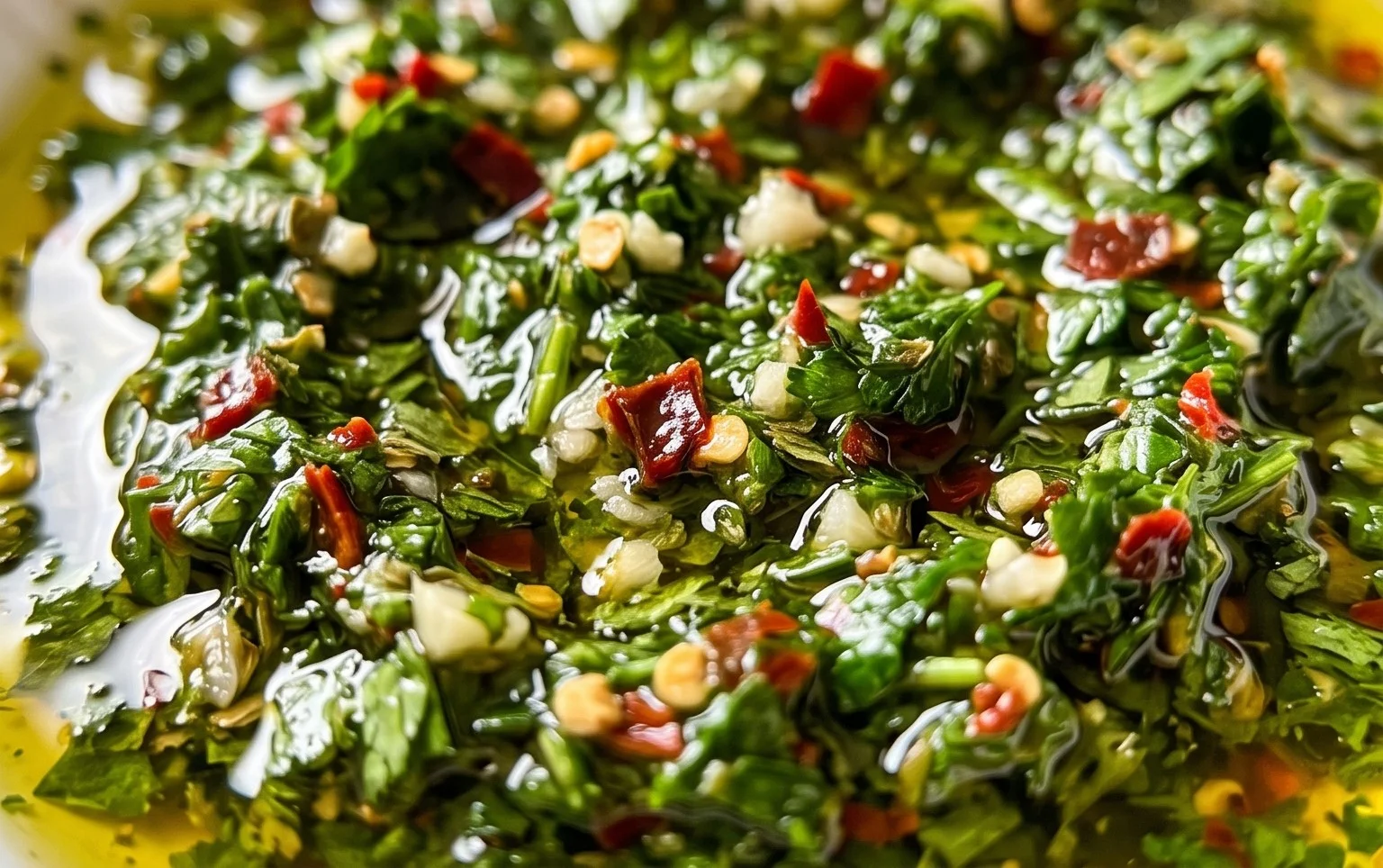
Now, process the mixture until it reaches your desired consistency. For a chunkier, more rustic chimichurri, pulse for shorter intervals, scraping down the sides of the food processor as needed. You want to see distinct pieces of herbs and aromatics. If you prefer a smoother sauce, continue processing until it’s more uniform. Be careful not to over-process into a complete puree, as you still want some texture. The color will be a vibrant, inviting green. Taste a small amount and adjust seasoning if necessary. You might want a little more salt, vinegar, or even a touch more lemon juice to balance the flavors. This is your chance to make it perfect for your palate.
5. Resting and Serving:
Once you’ve achieved your ideal texture and flavor balance, transfer the chimichurri to a clean jar or airtight container. For the best flavor, I highly recommend letting the chimichurri rest for at least 30 minutes, or even better, a few hours, in the refrigerator before serving. This resting period allows the flavors to meld and deepen, creating a more complex and harmonious sauce. The ingredients will continue to marry, and the raw garlic and onion will mellow slightly. Chimichurri can be stored in the refrigerator for up to a week. It’s fantastic served with grilled steaks, chicken, fish, beef, or vegetables. It’s also delicious drizzled over roasted potatoes, used as a marinade, or even stirred into a grain bowl. Enjoy this burst of fresh, herbaceous goodness!
Conclusion:
There you have it – your guide to making the most incredible Chimichurri Sauce Recipe! This vibrant, herbaceous sauce is a game-changer for so many dishes. Its zesty, garlicky, and slightly spicy profile is truly addictive, and the best part is how incredibly fresh it tastes. It’s so simple to whip up, making it perfect for impromptu gatherings or just elevating your weeknight meals. I truly encourage you to give this chimichurri a try; you won’t be disappointed with the burst of flavor it brings.
Think of the possibilities! This sauce is a classic pairing for grilled meats like steak and chicken, but it’s also fantastic drizzled over roasted vegetables, fish, or even used as a marinade. Don’t be afraid to experiment! You can easily adjust the heat by adding more or less chili flakes, or even toss in a sprig of cilantro for a different herbaceous note. Making this Chimichurri Sauce Recipe at home opens up a world of delicious possibilities, and I’m so excited for you to experience it.
Frequently Asked Questions:
How long does chimichurri sauce last?
When stored properly in an airtight container in the refrigerator, your homemade chimichurri sauce can last for about 1 to 2 weeks. The fresh herbs will start to lose their vibrancy over time, but the flavor will remain delicious for quite some time. It’s always best to use it within the first week for the freshest taste.
Can I freeze chimichurri sauce?
Yes, you absolutely can freeze chimichurri sauce! It’s a great way to preserve its freshness for longer. You can freeze it in ice cube trays, which makes it easy to thaw out small portions as needed. Once frozen, transfer the cubes to a freezer-safe bag or container. Frozen chimichurri will typically last for 2-3 months.
What if I don’t have fresh parsley? Can I use dried?
While fresh herbs are what give chimichurri its signature vibrant flavor and texture, you can use dried parsley in a pinch. However, you’ll need to adjust the quantity significantly. For every cup of fresh parsley, you’d typically use about 1 tablespoon of dried parsley. Keep in mind that the flavor will be less intense and the texture will be different. Fresh is always recommended for the best results!
Chimichurri Sauce Recipe
A vibrant and herbaceous Argentinian sauce perfect for grilling, dipping, or marinating. This recipe is a classic and versatile addition to any meal.
Ingredients
-
1 cup fresh Italian flat-leaf parsley (leaves only, stems removed)
-
1/4 cup fresh cilantro (leaves only, stems removed)
-
1/4 cup fresh oregano (leaves only, stems removed)
-
1/3 cup roughly chopped red onion
-
3 cloves garlic (peeled)
-
1/2 teaspoon red pepper flakes
-
1/2 cup extra-virgin olive oil
-
1/4 cup red grape juice vinegar
-
3 tablespoons fresh lemon juice
-
1 teaspoon kosher salt
Instructions
-
Step 1
Finely chop the fresh parsley, cilantro, and oregano. You can use a knife or a food processor for this, but be careful not to over-process into a paste. -
Step 2
In a medium bowl, combine the chopped herbs, red onion (or shallots), and minced garlic. -
Step 3
Add the red pepper flakes, extra-virgin olive oil, red grape juice vinegar, and fresh lemon juice to the bowl. -
Step 4
Stir in the kosher salt. Mix all ingredients thoroughly until well combined. -
Step 5
Taste and adjust seasoning as needed. For best flavor, let the chimichurri sit for at least 15-30 minutes at room temperature before serving, allowing the flavors to meld.
Important Information
Nutrition Facts (Per Serving)
It is important to consider this information as approximate and not to use it as definitive health advice.
Allergy Information
Please check ingredients for potential allergens and consult a health professional if in doubt.